
The Unseen Game of Leadership - Article 4

Updated: Sep 17
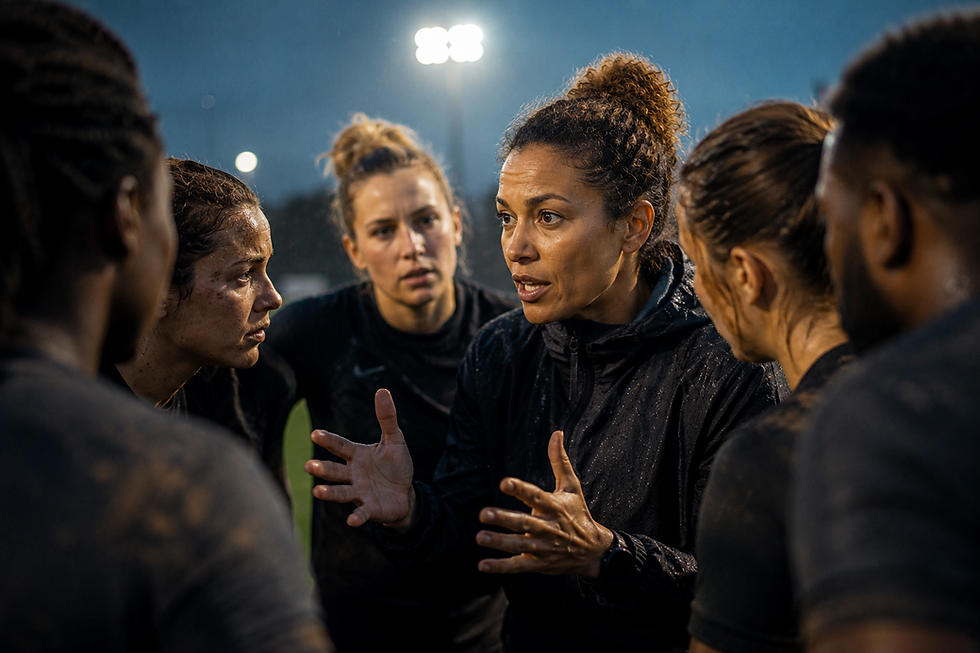
Pressure Reveals the System
What does pressure really expose?
When people watch elite sport, they often talk about athletes "performing under pressure." The penalty in the final minute, the decisive putt, the match winning conversion or the final over. Commentators often say: "They handled the pressure brilliantly" but elite athletes and coaches know something slightly different.
Pressure rarely creates performance. It reveals it. By the time an athlete stands over the winning kick, thousands of kicks have already been taken. By the time a tennis player serves for the championship, they have rehearsed that serve countless times.
By the time a captain makes a split second decision, they have built years of experience, habits, trust and preparation. The pressure simply exposes what already exists.
The same is true in leadership. Organisations often discover the quality of their leadership when circumstances become difficult. Markets change, customers leave, targets are missed, a cyber attack hits, a restructuring begins or a key leader resigns.
Suddenly everyone is watching but these moments do not create culture.
They reveal it. If trust already exists, people lean towards one another.
If communication has been open, uncertainty feels manageable. If accountability has been embedded, people step forward rather than step back. If leaders have created psychological safety, difficult conversations happen earlier. If relationships have been neglected, cracks begin to widen. Pressure exposes the habits that have been built long before the crisis arrived. This is why high performing teams do not wait for pressure before deciding how they want to behave. They decide beforehand.
In elite sport, teams rehearse scenarios repeatedly: playing with fourteen players, protecting a narrow lead, recovering after conceding, managing the final minutes or responding when momentum changes. They prepare for uncertainty before uncertainty arrives. Yet in business, we often expect teams to navigate pressure without ever rehearsing it. We assume collaboration will simply happen, we hope communication will naturally improve, we expect leaders to remain calm because their job title says they should. But calm is rarely a personality trait. More often, it is the product of preparation.
The best leaders build the system before they need the system. They create clarity before complexity, trust before tension, honest conversations before conflict and strong relationships before difficult decisions. Because once pressure arrives, people do not usually invent new behaviours. They fall back on familiar ones. That is why leadership is less about managing the crisis than it is about preparing people before the crisis comes. The organisations that recover quickest are rarely the ones with the fewest problems. They are the ones with the strongest foundations. Teams who know one another, leaders who communicate consistently, people who understand the purpose and individuals who trust each other enough to speak up.
Pressure does not make these things happen. Pressure simply makes them visible.
Perhaps that is why some organisations emerge stronger after difficult periods, while others struggle to recover. The difference is rarely the pressure itself. It is the strength of the system underneath it.
So perhaps the real leadership question is not: "How will my team perform when pressure comes?"
It is: "What are we building today that pressure will eventually reveal?"
Because in sport and in business, pressure is not the enemy, it is the mirror and it reflects the quality of the preparation, the strength of the relationships, the consistency of the culture and ultimately, the effectiveness of leadership.
If your organisation came under significant pressure tomorrow, what would it reveal about the culture, trust and leadership you have built today?
At PROBOS we believe leadership is not becoming simpler. But it can become clearer.
We help leaders navigate complexity with clarity and confidence.


Comments